
Hammer toes & Hammer toe Surgery
What is Hammer Toe?
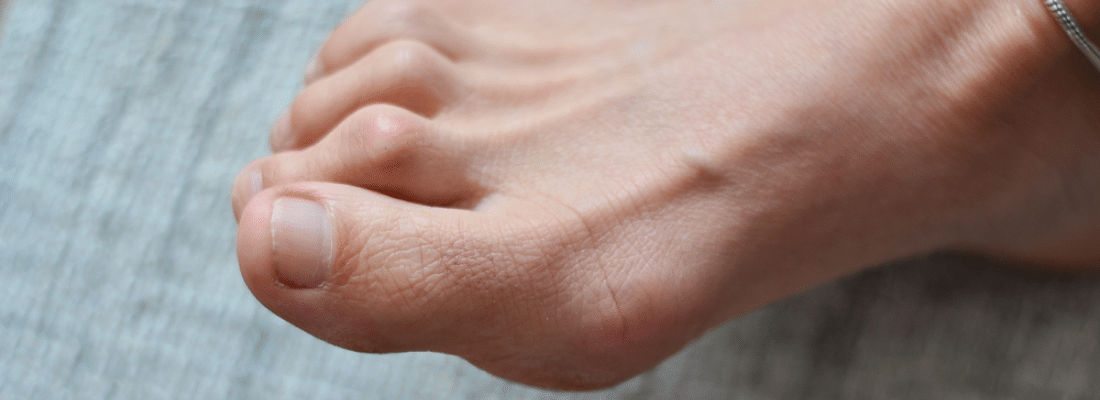
Hammer toe is a common condition that typically affects any one of the middle three toes, causing it to bend upward at the joint, resulting in a hammer-like appearance. This abnormal bending is usually caused by muscle imbalances, where certain muscles weaken, leaving the tendons in the toe to bear increased pressure. Over time, this strain on the tendons and ligaments can lead to a permanent deformity of the joint. Hammertoes can cause discomfort or pain, especially when walking or wearing shoes, and the condition may worsen if left untreated.
Corns & Calluses
In some cases, individuals with hammertoe may also develop additional foot issues, such as corns or calluses, due to friction between the raised toe and footwear. Early intervention can help prevent further complications, and treatments range from wearing custom orthotics to surgical correction in severe cases.
Common Causes of Hammer Toe
Hammertoes are often caused by a variety of factors, with prolonged use of poorly fitting footwear being one of the most common contributors. Shoes that are pointy, tight, or have high heels can force the toes into an unnatural position, creating long-term pressure that leads to the development of hammertoe. Over time, this continuous strain can cause the muscles and tendons in the toes to weaken, resulting in the characteristic upward bending of the toe joint. Aside from footwear, other health conditions can also increase the risk of hammertoe. Diabetes-related complications, such as nerve damage and poor circulation, can lead to muscle imbalances in the feet, making it difficult to control the toes properly.
Similarly, spinal cord injuries can disrupt the muscles that stabilize the toes, contributing to the deformity. It’s important to address these underlying causes early to prevent the progression of hammertoe and to explore treatment options that may include orthotics, exercises, or even surgery for more advanced cases.

Start living pain-free again
How Podiatrists Treat Hammer Toe
Depending on your case history, we at University Foot Associates first analyze and prepare a comprehensive healing plan. We then stick to this and help to heal your condition as soon as possible. Generally, podiatrists suggest wearing roomier and more comfortable shoes or using pads or over-the-counter splints. When this does not solve the issue, the next option recommended by doctors is a single, outpatient surgery that straightens the toe joint. Based on your condition, there are various surgery possibilities. As an alternative to traditional hammer toe surgery, Dr. Nasser offers a minimally invasive technique called a percutaneous (open) flexor tenotomy. This treatment is very different from traditional hammertoe surgery that involves bone removal or joint fusion.
MIS Office-Based Flexor Tenotomy
A flexor tenotomy works by releasing the tight tendon on the bottom of the toe that is pulling the toe downward and causing it to curl. Once the tendon is released, the toe is able to straighten naturally.
Key Features Of This Procedure
- Performed in the office
- No general anesthesia required — only a local numbing injection in the toe (similar to dental numbing)
- No bone cutting
- No screws, pins, wires, or implants
- The incision is extremely small (needle-size or tiny puncture)
- Very little postoperative pain
Recovery Process
- Walk immediately after the procedure
- Return to normal shoes within 1–2 days
- Minimal downtime
- Minimal swelling
- Very little postoperative pain
Traditional Hammer Toe Surgery Options (Arthroplasty / Arthrodesis)
Fusion Of the Toe Joint Or Removal Of Bone
The most common surgical procedure for hammertoes, here, both ends of the bones are cut at the fixed joint. A pin or K-wire is temporarily used to keep the toe straight. Once done, the pin is removed. A newer technique used currently is when a rod or screw is permanently inserted.
Recovery
- 4–6 weeks in a surgical shoe
- Activity limitations
- More swelling and stiffness during healing
- Higher overall recovery burden
Meet our podiatrists
Each of our doctors completed surgical residency training, so you get skilled care for everything from heel pain to foot and ankle surgery at our Gurnee office.

Dr. Audey Nasser, DPM
Double board-certified podiatrist
Bunion and hammertoe correction, tendon repair, and home, assisted living and nursing home visits.
View Profile
Dr. Krishna Tikiwala, DPM
Podiatrist trained at a Level 1 trauma center
Sports injuries and trauma, pediatric foot conditions, and wound care with diabetic limb salvage.
View Profile
Dr. Manali Chingre, DPM
Board-qualified foot and ankle surgeon
Heel pain and plantar fasciitis, flatfeet and tendon disorders, and foot and ankle surgery.
View ProfileRisk Factors for Developing Hammer Toe:
-
People who have unusually long toes
- People who have hurt their toes many times
- People who have rheumatoid arthritis
Why Choose University Foot Associates?
When it comes to treating chronic foot and ankle pain, experience and specialization matter. At University Foot Associates, our team focuses exclusively on foot and ankle conditions—giving you a level of expertise and precision that general clinics simply can’t match.
Specialized Foot & Ankle Expertise
Unlike general physical therapy or chiropractic offices, our providers are trained specifically in diagnosing and treating foot-related conditions. This allows us to accurately identify the root cause of your pain.
Trusted Board-Certified Podiatrists
Our board-certified podiatrists Dr. Nasser and Dr. Tikiwala specialize exclusively in foot and ankle care. They are board-certified by both the American Board of Podiatric Medicine as well as the American Board of Foot and Ankle Surgery.
Hammertoe FAQs:
Q: How do you treat a hammer toe?
A: Painful symptoms can be managed with orthotics and wide shoes. Hammertoe can be improved with a simple minimally invasive procedure done in the office without the need of general anesthesia. There is minimal downtime undergoing this procedure and minimal to no pain.
Q: Can you straighten hammer toes?
A: Conservative treatments for hammertoe can slow the progression of the joint deformity. To straighten the joint, an in-office procedure that is minimally invasive with minimal downtime can be performed.
Q: Do hammertoes go away naturally?
A: Hammertoes are a progressive condition, meaning they will not go away by themselves. It is easier to correct the hammertoe if you catch it early. A podiatrist can assess the degree of severity and recommend a proper treatment plan.
Q: What does a hammer toe look like?
A: The affected toe bends and curls and multiple joints in the toe.
Q: Does insurance cover hammertoe treatment?
A: Coverage depends on your plan, your diagnosis, and whether the treatment is considered medically necessary. Correcting a painful or rigid hammertoe is usually handled differently than a cosmetic request, and some plans require authorization before surgery. Our staff can explain how billing works, and your insurer can confirm benefits, deductibles, and referral rules. Visit our insurance page for more information on which plans we accept.
Q: Do you see walk-in patients for hammertoe pain?
A: Yes. Walk-ins are welcome during regular office hours. If you would prefer a set time, call (847) 295-9300 and we can often schedule you the same day.
Posted on Google Michael Herman7 May 2023
Trustindex verifies that the original source of the review is Google.
I used to be a patient with the former Podiatrist. Dr. Nasser did an outstanding job removing 2 of my toe nails. Sounds horrible! No pain. I would highly recommend seeing him. Dr. Nasser and his staff are very friendly. Fast forward to June of 2022 as well as April 2023, Dr. Nasser did a minor procedures for both of my feet, (hammer toe) Both procedures were done with excellent care and great follow up. If you are looking for a caring Podiatrist, that treats you as a patient rather than a dollar sign or a number, then contact these guys. You will not be disappointed.Posted on GoogleValerie Curran3 July 2022Prompt, super professional service from the staff and thoroughly reassuring care from Dr. Nasser. I'm back in my little heels after more than 4 years. Of course I wish. I had met Dr. Nasser sooner. Will tell everyone who asks about my experience of straitening hammer toes , he's the Pro to take care of you.Posted on GoogleLana Miari25 August 2021Dr. Nasser corrected two hammertoes for me. They healed beautifully (as if they were never operated on) and my pain is gone. Would highly recommend.Verified by TrustindexTrustindex verified badge is the Universal Symbol of Trust. Only the greatest companies can get the verified badge who has a review score above 4.5, based on customer reviews over the past 12 months. Read more
