

Bunion Treatment & Surgery in Gurnee, IL

University Foot Associates provides personalized bunion treatment and surgery at our Gurnee podiatry office for patients experiencing pain, swelling, difficulty wearing shoes, or changes in the alignment of the big toe.


Our podiatrists will evaluate your symptoms, foot structure, activity level, and treatment goals to determine the most appropriate course of care. Nonsurgical options may help relieve pressure and discomfort, while surgery may be considered when bunion pain continues to interfere with walking, work, exercise, or everyday activities. Schedule an evaluation to learn which treatment options may be right for you.

doctors performing bunion surgery

What are Bunions?

A bunion, also known as hallux valgus, develops when the bones at the base of the big toe move out of alignment. As the big toe gradually leans toward the second toe, the joint may become more prominent and form a visible bump along the inside of the foot. Some bunions cause few symptoms, while others lead to pain, swelling, stiffness, skin irritation, or difficulty wearing shoes and walking comfortably.


Bunions often develop gradually and may be influenced by inherited foot structure, joint mechanics, arthritis, or a previous foot injury. Narrow or poorly fitting shoes do not necessarily cause bunions, but they can increase pressure on the joint and aggravate symptoms.


Because every bunion progresses differently, treatment should be based on your symptoms, joint alignment, activity level, and treatment goals. Nonsurgical care may help relieve pressure and discomfort, while surgery may be considered when persistent bunion pain limits everyday activities and conservative treatment has not provided enough relief.

Common Signs and Symptoms of a Bunion

A bunion is more than a bump on the side of the foot. It develops as the bones at the base of the big toe move out of alignment, causing the big toe to lean toward the second toe. Some bunions cause few problems, while others become painful and interfere with shoes, walking, or everyday activities.

Common signs and symptoms include:

  • A visible bump at the base of the big toe

  • The big toe leaning toward or pressing against the second toe

  • Pain or soreness around the big-toe joint

  • Redness, swelling, or inflammation near the bump

  • Corns or calluses where the toes rub together

  • Difficulty finding comfortable shoes

  • Limited or painful movement of the big toe

  • Burning, tingling, or numbness around the affected area

  • Pain that worsens after prolonged standing or walking

Bunions often progress gradually, although the rate of change differs from person to person. If your symptoms persist, your toe alignment is changing, or bunion pain is limiting your normal activities, a podiatric evaluation can help determine the severity of the condition and the most appropriate treatment.

Treatment for Bunions

Nonsurgical treatment cannot permanently correct the underlying joint alignment, but it may reduce pressure, irritation, and pain. Recommendations may include one or more conservative treatments based on your symptoms, foot structure, footwear, and activity level. Treatments may include;

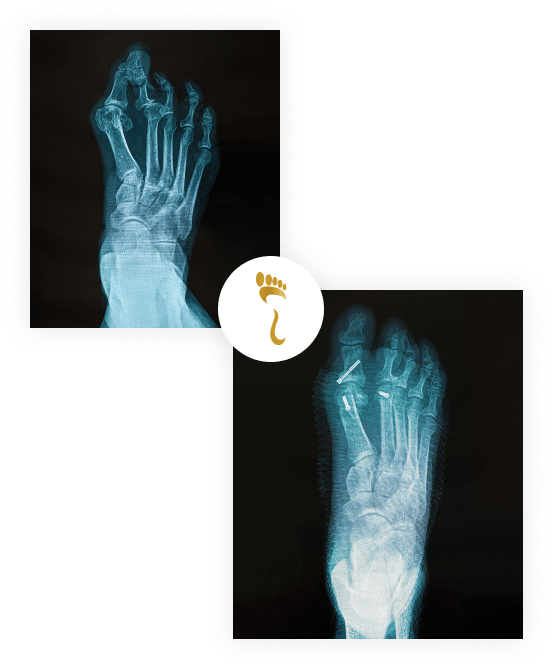
podiatric bunion foot x-ray

Bunion Surgery

If these treatments don’t help, then our podiatrists may suggest surgery. Surgery is generally considered when pain limits daily activities and appropriate nonsurgical care has not helped enough. X-Rays of the bone and foot help to diagnose and provide more information. The type of procedure depends on the severity, general health, activity level, age, and condition of the bone and other connective tissues. 

Why Choose University Foot Associates?

When it comes to treating chronic foot and ankle pain, experience and specialization matter. At University Foot Associates, our team focuses exclusively on foot and ankle conditions—giving you a level of expertise and precision that general clinics simply can’t match.

Specialized Foot & Ankle Expertise

Unlike general physical therapy or chiropractic offices, our providers are trained specifically in diagnosing and treating foot-related conditions. This allows us to accurately identify the root cause of your pain.

Trusted Board-Certified Podiatrists

Our board-certified podiatrists Dr. Nasser and Dr. Tikiwala specialize exclusively in foot and ankle care. They are board-certified by both the American Board of Podiatric Medicine as well as the American Board of Foot and Ankle Surgery.


EXCELLENT
Trustindex star 1Trustindex star 2Trustindex star 3Trustindex star 4Trustindex star 5
Based on 248 reviews
Posted on Google Google
Summer Berri
13 March 2021
Google star 1Google star 2Google star 3Google star 4Google star 5Trustindex verifies that the original source of the review is Google.
Highly recommend!!!! I was evaluated by Dr. Nasser for my bunion pain. Over the years I have tried different orthotics and inserts which worked initially, but as time went on the pain had gotten much worse. After discussing my options with Dr. Nasser I decided to have bunion surgery. The surgery went well and I no longer have pain!!!!!
Verified by Trustindex
Trustindex verified badge is the Universal Symbol of Trust. Only the greatest companies can get the verified badge who has a review score above 4.5, based on customer reviews over the past 12 months. Read more

If you are experiencing chronic foot or heel pain, contact University Foot Associates to learn more.  Get in touch with our team to schedule an appointment today. Located in Gurnee, Illinois University Foot Associates serves the greater North Chicago area including GrayslakeLake Forest, and Lake County


731 S IL Route 21, Suite 140 Gurnee, IL 60031

(847) 295-9300

Frequently Asked Questions:

Q: How do you get rid of bunions on your feet?

A: Once a bunion or bump at the big toe joint start, you are unable to get rid of it without surgical intervention. Wearing wide shoes, protecting the bunion with gel pads, and orthotics can relieve discomfort associated with bunions.


Q: Can Bunions go away naturally?

A: A podiatrist can provide many ways to reduce inflammation and discomfort from bunions but they will not go away on their own.


Q: What is the main cause of bunions?

A: Bunions are caused by a variety of factors. Foot structure and mechanics can create a predisposition, while narrow or poorly fitting shoes may aggravate symptoms or progression.

Schedule Your Appointment Today.